
How to Play Wingo: A Simple Beginner’s Guide
New to the game? This guide explains how to play Wingo from scratch: the board, the timer, placing a prediction, reading the result, and setting a budget. Practice everything for free with play-money before you risk anything.
Wingo at a glance
Wingo is a color prediction game. You predict whether a short round’s result will be a certain color — red, green, or violet — or an exact number. If you match, you win a payout; if not, you lose the stake. It is quick and easy to learn, and it is based on chance, so no skill or trick can guarantee a result. For the deeper mechanics, see our Wingo prediction guide.
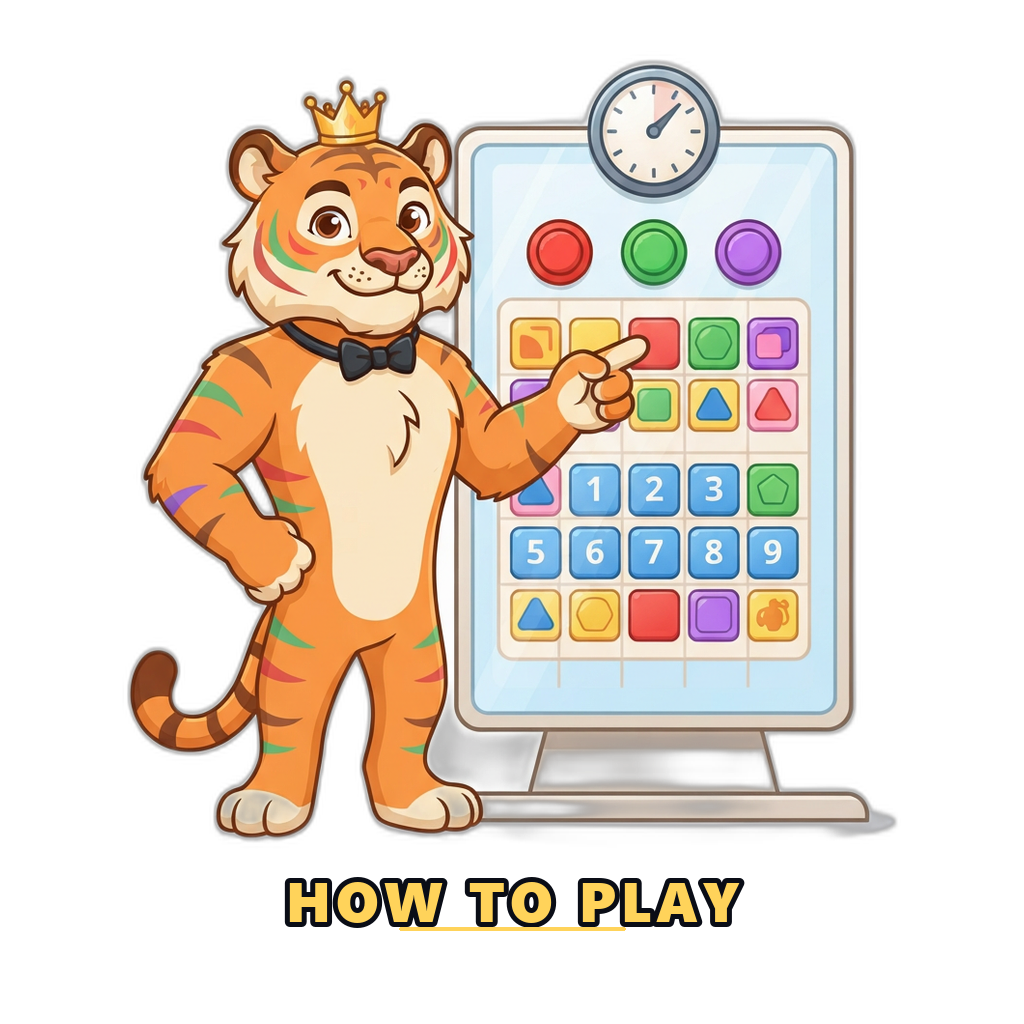
Understanding the board
| Part of the board | What it shows | How you use it |
|---|---|---|
| Timer | Seconds left to bet | Predict before it locks |
| Color buttons | Green, violet, red | Tap to predict a color |
| Number buttons | 0 to 9 | Tap for an exact-number bet |
| Stake selector | Amount per bet | Choose a small amount |
| Results row | Recent outcomes | History only — not a signal |
How to play, step by step
- Create a free demo account and open the demo.
- Watch one full round without betting to learn the rhythm.
- Pick a small stake using the stake selector.
- Tap a color (start with green or red — they win more often).
- Wait for the timer to lock and the result to appear.
- Review the outcome, then decide whether to play the next round.
Watch before you bet
The single best habit for a new player is to watch a few rounds without placing any prediction. Watching costs nothing and teaches you the rhythm: how long the betting window stays open, when it locks, how the result appears, and how the payouts settle. After three or four rounds the flow will feel familiar, and you will place your first prediction calmly instead of rushing. In the free demo you can watch as many rounds as you like with no pressure at all.
Reading the results row correctly
Every Wingo board shows a row of recent results. New players often misread this row as a hint about what comes next — for example, seeing several greens and betting red because it feels “due”. This is the most common misunderstanding in the game. The results row is simply a history of independent, random rounds. It cannot predict the future, because nothing about a past result changes the next draw.
So what is the results row actually good for? Two honest uses: it helps you understand the game’s natural ups and downs, and it acts as a quiet check on your own discipline — if you notice you have played far more rounds than you planned, that is your signal to stop. Treat the row as a mirror of your session, not a crystal ball.

Setting a budget first
Before your first real-money round — if you ever choose to play for real — decide two numbers: how much money you are willing to spend for entertainment, and how long you will play. Write them down. When you hit either limit, stop. This single habit protects you more than any “strategy” ever could.
| Setting | Suggested start | Why |
|---|---|---|
| Budget | A small, fixed amount | Caps your total risk |
| Time limit | 15–20 minutes | Keeps it light and fun |
| Stake size | The smallest option | Stretches your practice |
| First bets | Green or red only | They win more often while you learn |
| Stop rule | When budget or time ends | Removes emotion from the decision |
A first-week practice routine
If you want to learn properly, spend your first week entirely in the free demo. It costs nothing, and it builds good habits before any real money is involved. Here is a gentle routine that works well.
| Day | Focus | What you learn |
|---|---|---|
| Day 1–2 | Just watch rounds | The timing and flow |
| Day 3–4 | Small green/red bets | How steady, low-variance play feels |
| Day 5 | Try one violet bet | How higher variance feels |
| Day 6 | Practice stopping on time | The most valuable skill of all |
| Day 7 | Review your demo history | Whether the game suits you at all |
By the end of the week you will understand the game far better than any “trick” video could teach you — and you will have spent nothing to learn it.
Stakes and payouts with examples
Understanding how a stake turns into a payout removes a lot of confusion. Your stake is simply the amount you place on a prediction, and the payout is your stake multiplied by the option’s multiplier if you win. A ₹10 stake on green at 2× returns about ₹20 (your ₹10 back plus ₹10 profit); the same ₹10 on violet at roughly 4.5× returns about ₹45 when it lands, but it lands far less often. The table makes the trade-off clear.
| Bet | Multiplier | Return if it wins | How often it wins |
|---|---|---|---|
| Green | ~2× | ~₹20 | A little under half the time |
| Red | ~2× | ~₹20 | A little under half the time |
| Violet | ~4.5× | ~₹45 | A small share of rounds |
| Exact number | ~9× | ~₹90 | Roughly one in ten |
Notice again the balance: the bigger the payout, the rarer the win. There is no option that is both easy to hit and high-paying — if there were, the game could not exist.
When to stop: the key skill
If there is one skill that matters more than any other in Wingo, it is stopping. Most players know how to start; far fewer practise stopping on time, win or lose. Decide two stop-points before you play: a loss limit (stop if your balance falls to a set amount) and a win cap (bank your winnings and stop if you are pleasantly ahead). Both protect you — the loss limit from a bad run, and the win cap from giving winnings straight back chasing more. A simple phone alarm for your time limit is the third safeguard.
Practise stopping in the demo just as deliberately as you practise playing. It sounds odd, but rehearsing the act of closing the game when you hit a limit builds the exact habit that keeps real play safe. It is the closest thing to a winning “system” that honestly exists: protect your money and your time.
Beginner mistakes to avoid
- Chasing losses by increasing stakes — this usually makes things worse.
- Believing a color is “due” — rounds are independent.
- Trusting “prediction” or “hack” apps — they do not work.
- Playing without a time limit — set an alarm.
- Using money meant for bills or savings — only ever use spare money.
Glossary of Wingo terms
A few words come up again and again. Here is a plain-language glossary so nothing is confusing when you start.
| Term | What it means |
|---|---|
| Round | One complete game: open, predict, close, result |
| Stake | The amount of money you put on a prediction |
| Payout / multiplier | How much a winning bet returns (e.g. 2×) |
| Violet | The rarer, higher-paying colour result |
| Variance | How big the ups and downs feel |
| Chasing losses | Betting more to recover a loss — avoid this |
| Demo / play-money | Practice mode with no real money |
Practice with a demo
The best first step is the free Wingo demo. It uses play-money, so you can make every beginner mistake at zero cost and learn from it safely. When you are ready, deepen your understanding with the Wingo prediction guide and the color prediction guide.
Frequently Asked Questions
How do I play Wingo for the first time?
Start with the free demo so you risk nothing. Watch one round without betting, then place a small prediction on a color, wait for the timer, and see the result. Repeat a few times until the flow feels natural before considering real money.
How long does a Wingo round take?
It depends on the format. The 1-minute round is the fastest; 3-minute and 5-minute rounds are calmer. All use the same rules and odds — only the speed differs.
Do I need to download anything to play the demo?
No. The demo on this site runs in your browser with play-money. You just create a free demo account and start.
How much should a beginner stake?
As little as possible. Set a small total budget for entertainment, use the smallest stakes, and never add money to recover a loss. The goal at the start is to learn, not to earn.
Is Wingo a skill game?
No. Wingo is based on chance. Skill cannot change a random result. What you can control is your budget, your stake size, and when you stop.
Try the free Jai Club demo
Practice Wingo color prediction with play-money — no deposit, no risk.
Demo uses play-money only. 18+. Play responsibly.